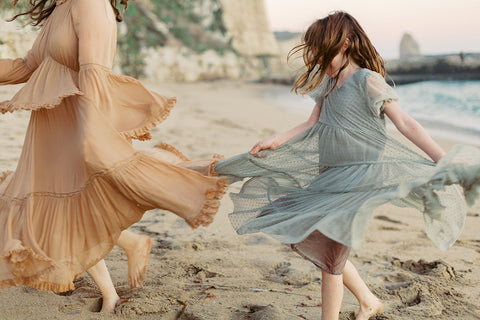
There are people in the TAP community who are a quiet force. People whose words carry a lot of weight and are noticed while not distracting from what others are saying. Tom is one of those people! He is an incredible photographer, gives invaluable feedback, and is someone we value so, so much when it comes to community. We are so excited to share his TAP photographer profile with you!

IG Tag: @bytomw Website: www.bytomw.com
Where you’re based:
I’m based in Lancashire in the UK but my clients live everywhere from Australia to California.
What camera gear do you use?
I have used essentially every camera system for professional work (except Hasselblad and Panasonic) but currently I’m using Nikon Mirrorless Cameras with Native Z and Adapted Leica M and Nikon F lenses.
How long have you been shooting?
Over 15 years.

What inspired you to shoot professionally?
I got started as a photographer teaching workshops for the Impossible Project (the company that resurrected Polaroid Film) back in the early 2010s, before that I had never picked up a camera. The way that film reacted so differently in different conditions made me fall in love with photography as an art form, but I was earning from my photography and teaching from day 1.
Personally I feel like photography doesn’t have the same impact without a patron supporting it. Most fine art photography (in the traditional sense) leaves me cold, but I could spend a lifetime looking at works that have been made for magazines, interviews or advertising.
I love the idea of art as a method of communication and less about shock and awe.
What is your favorite place to photograph?
Honestly, place is a little irrelevant to me; I want to photograph people, ideally people engaging in something creative or meaningful to them.
What place would you love to shoot but haven’t had a chance yet?
The location is so connected to that work that I don’t really see the places as separate to the subject. I’d love to work with an instrument maker in their workshop. I want to watch as someone shapes wood into something that enables someone else’s creativity.

What do you look for in a session?
Most of my work now is consulting and as such I get to see a lot of different approaches to photography sessions. Without fail the thing that excites me the most is when I see a photographer considering the wants, needs and desires of their subject above all else. Sessions can be lit beautifully, show the photographers skill and totally fail to capture something that shows the real person in the work.
If you can build a visual language that defines how an image should look and then apply that in service of a client, that’s the DREAM.
What is your Archetype and why? (Which profile is your go to?)
This is variable but I’m a product of the time I learned photography, I love Fuji 400h + 2, Kodak Portra 160 and 400 at box speed and Portra 800 + 2. Those are the films that made me move away from instant film and into film photography in the first place. I prefer the tonality of a Frontier scanner also but with more and more labs running Noritsu for convenience or resolution reasons these days I’m making a real effort to develop looks around Noritsu profiles as well.
What are some of your editing techniques or tips and tricks?
A large part of my consulting practice is to teach proper post production, but to give you something simple I’d say that good editing is as little editing as possible to get the results you want.
If you find yourself regularly tweaking camera calibration, HSL and Curves differently for every image it’s likely something’s wrong.
With excellent tools like TAP it should be possible to get the results you need with a simple profile and maybe some tweaks to adjust the baseline to your preference. After that, all the things you need are in the basic panel in Lightroom.

What are some of your biggest challenges in running your business?
For me one of the hardest things I did was shifting focus from my own photography practice to consulting for other photographers.
Helping others to grow has been the most rewarding thing I have ever done and the results I see give me an incredible sense of pride that I could play a part in the success of so many others. That said, I still miss the experience of shooting for clients on a more regular basis.
Who are your creative influences?
Too wide to recount, if the photograph was made to communicate I want to see it! My personal top 5 photographers at the moment outside of my clients are Parker Fitzgerald, Andrew Paynter, James Harvey Kelly, Lucy Laucht and Justin Chung.
Describe your “Ah Ha” moment in photography.
Realising that photography is more about developing your practice and not just following best practice.
If you want your work to stand out, doing the things that your heroes did won’t do it. You have to cultivate your visual voice and language to make something that feels different to your peers.

What are some mistakes that helped you to grow as a photographer?
People say that you should fail fast and often; that’s never been something I agree with. For me photography should be seen as a series of chances to learn.
Taking action to make something, reflecting on what you made and how it felt to make it and then planning ways to make it feel better will give you a much more positive experience with creativity than seeing your craft as a simple chance to pass or fail.
What inspires you to stay creative?
I spend most of my time trying to help photographers solve this problem; I don’t think it’s a simple one to answer. The most common reason for people feeling uninspired is usually one of the following.
- You lose confidence in your creative voice and decide that you aren’t good enough. This leads you to a dark place of trying to shrink back to fit into the space you think you need to occupy, you feel stifled and isolated.
- The artwork you are making got successful and you feel trapped in the work that you made in the past. You build a process that’s efficient and delivers exactly what your clients fell in love with but it doesn’t give you room to make more experimental work.
- Life gets harder. We are all real people, we have families, financial commitments and we live in a world that’s changing every day. When real life gets hard, photography can be an escape but from my experience more often than not we create better AFTER adversity, not during it.
To me staying inspired involves finding the root cause of your creative block and taking practical steps to fix it over time. Think of it more like therapy than paint by numbers.
What goals do you hope to achieve this year?
I want to help as many people as possible to make unique, inspiring and creative work. The more of us that are out there making photography that stands apart the better the industry gets.
I want to fill this industry with fulfilled artists.

Is there anything you’d like to share about the creative process or editing that you feel would be helpful?
Most of my time is spent helping photographers get clarity on their creative process and building their visual identity. I call the process Photo Therapy.
I call it therapy because it’s a place to help you work out what’s getting in the way of your best work. If you struggle with anxiety, you’d find a cognitive therapist. If you pulled a muscle, you’d go to an physical therapist.
If your backup system keeps you awake at night, you can't get over the latest bout of creative burnout, or you need to make a change to your style, you need a photo therapist.
This isn’t an exhaustive list but usually that looks like one of these things:
- In Person Photography Coaching
- One-to-One Real Time Education Online
- Ongoing Technical or Creative Support
What is something you would have loved to have learned from another photographer early in your career?
I wish that I had known I wasn’t alone. That there is a whole industry of people that can genuinely be our peers and support network if we make the effort to develop a visual style that stands apart. Seeing others creatives this way helps us to recommend the people we respect to potential clients when the alignment isn’t strong and helps feed someone else’s family.
People say community over competition, but I think we can have community and still stay competitive.